
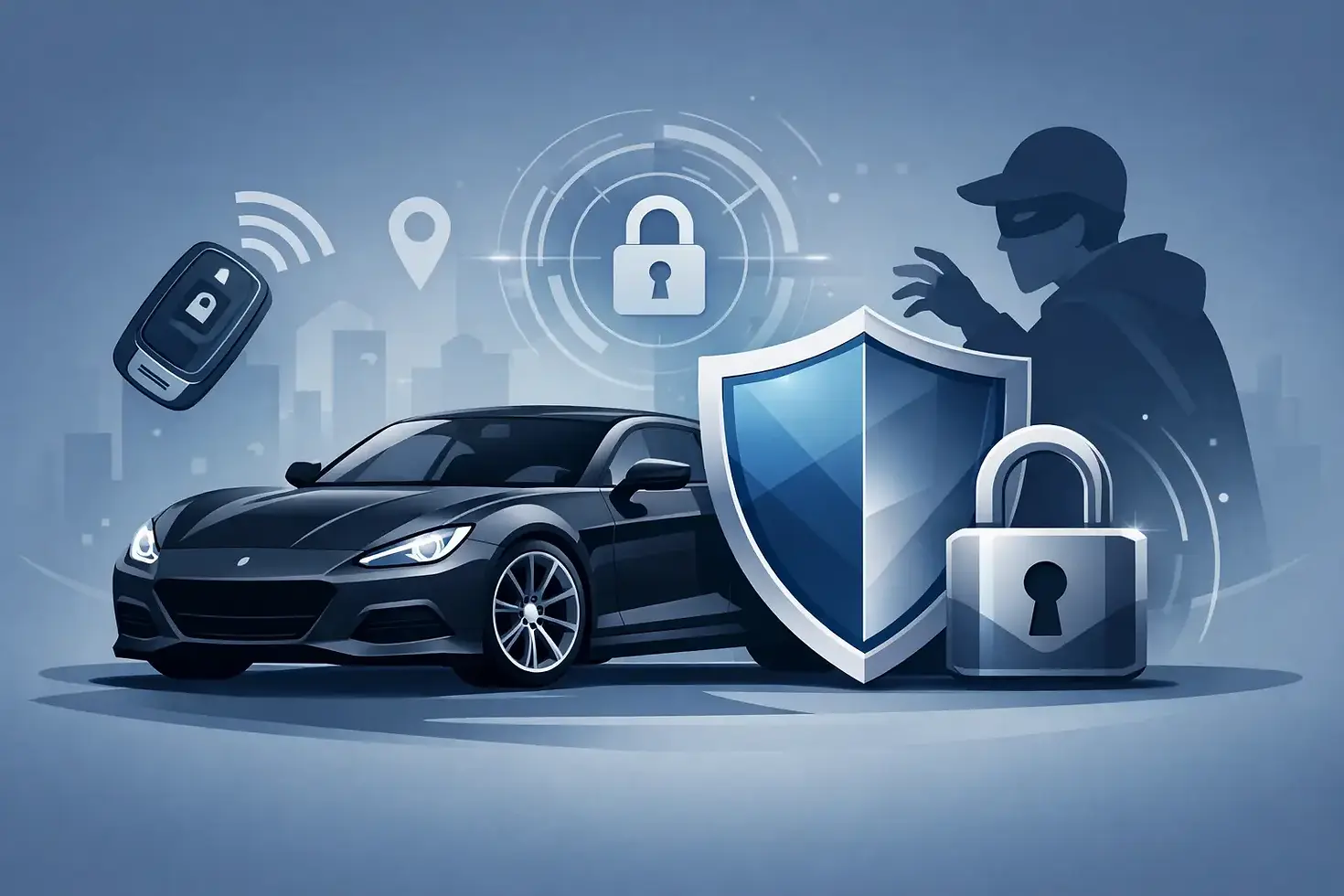
Luxury Car Anti Theft That Stops the Start
A stolen luxury vehicle is rarely a simple broken-window crime. Modern theft crews may arrive with programming tools, relay equipment, cloned key data, or a plan to exploit the convenience features that make premium vehicles easy to live with. That is why luxury car anti theft should focus on a more meaningful question: can someone actually drive the vehicle away?
For owners of high-end cars and SUVs, a loud siren or a visible steering-wheel lock can still have value as a deterrent. But those measures do not always address the moment that matters most. If a thief has access to a programmed key, key signal, or diagnostic port, the vehicle may start and leave before anyone notices. Real protection needs to interrupt that sequence without changing the factory look, feel, or daily driving experience.
Why Luxury Vehicles Need a Different Security Strategy
Luxury vehicles are attractive targets for obvious reasons. They have high resale value, desirable parts, and strong demand in markets far beyond where they were originally taken. They also often use advanced keyless entry, push-button start, connected services, and complex electronic control modules. Those systems make ownership more convenient, but convenience can create additional attack paths when the wrong person gets access.
The old approach to vehicle security was largely visible: alarms, flashing LEDs, hood pins, and steering locks. A determined thief could identify those components, disconnect them, or simply accept the noise. Factory alarms are useful for alerting nearby people, but they may not prevent a vehicle from being started with a compromised key or electronic method.
A premium security plan treats theft prevention as layered protection. Physical deterrents may slow someone down. Tracking can help after a loss. Insurance can reduce the financial impact. None of those, however, replaces a system designed to prevent unauthorized engine starting in the first place.
What Effective Luxury Car Anti Theft Looks Like
The strongest anti-theft upgrades for luxury vehicles are discreet, vehicle-specific, and designed around authorization. Instead of relying on a separate remote, obvious keypad, or a highly visible add-on, the system can require a custom sequence using existing factory controls before the vehicle is allowed to start.
With an IGLA anti-theft system, the driver enters a personal PIN code through original buttons inside the vehicle, such as steering-wheel controls, cruise-control buttons, or other factory inputs. Until the correct code is entered, the engine remains immobilized. The sequence can be changed by the owner, and the system is designed to remain hidden from view.
That distinction matters. A thief may possess a key fob. They may gain access through key cloning, a relay attack, or unauthorized diagnostic activity. If they do not know the driver’s code, having a key is not necessarily enough to drive away. The security decision stays with the owner.
The best installations preserve the OEM interior. There is no need to replace the factory head unit, add a clunky dashboard panel, or fill a premium cabin with wires and blinking accessories. For an owner who chose a vehicle for its design, craftsmanship, and technology, that factory-integrated approach is not a small detail. It is the standard.
Immobilization Beats Notification Alone
An alarm tells you something has already happened. A tracker can show where the vehicle went. Immobilization is aimed at stopping the departure.
This does not mean alarms and trackers are useless. In fact, a layered setup can make sense for a vehicle that spends time at airports, hotels, public garages, or trailheads. The trade-off is understanding each tool’s job. A tracker helps recovery. An alarm draws attention. An immobilizer helps prevent the vehicle from being driven away under unauthorized conditions.
For many luxury owners, prevention is the priority. A recovered vehicle may still come back with collision damage, stripped components, contaminated upholstery, or a complicated insurance history. Keeping it parked where it belongs is the better outcome.
Factory Integration Is a Security Feature
Security hardware is only as dependable as its installation. High-end vehicles have sophisticated communication networks and sensitive electronics. A generic install can create warning lights, parasitic battery drain, unreliable operation, or damage to the interior trim that no owner wants to see.
A professional, vehicle-specific installation accounts for the vehicle’s architecture and protects the original ownership experience. Components should be concealed intelligently, connections should be made with care, and the vehicle should be tested thoroughly before it leaves the shop. The goal is not to make the car feel modified. The goal is to make unauthorized use dramatically harder while the authorized driver follows a simple routine.
This is why specialty matters. A premium vehicle is not the place for a one-size-fits-all solution or rushed wiring hidden behind the dash. The right installer understands the systems behind the interior, not just the trim pieces in front of them.
Common Theft Methods and Where Protection Fits
No security product can honestly claim to solve every scenario. Owners should understand the threats most relevant to how and where they use their vehicles.
Relay attacks target keyless-entry systems by extending the communication range between a vehicle and key fob. Key cloning and programming attacks focus on obtaining or creating a working key. Some thieves target diagnostic access to add keys or manipulate vehicle functions. Others rely on the oldest method of all: taking keys from a home, gym locker, valet stand, or unattended bag.
A PIN-based immobilization layer is especially valuable because it is separate from possession of the key. If a thief has the fob but lacks the authorization sequence, they face another barrier before the vehicle can be started.
There are practical limits. If a criminal physically transports a vehicle on a flatbed, an engine immobilizer cannot prevent that act by itself. If someone is forced to surrender a vehicle under immediate threat, personal safety must always come first. Security should reduce risk, not encourage confrontation. In these situations, tracking and recovery support may become more relevant as part of the broader plan.
Choosing the Right Setup for Your Vehicle
The right solution depends on your vehicle, parking habits, travel patterns, and comfort with daily security steps. A driver who keeps a luxury SUV in a secured garage may have different needs than someone who parks a high-performance sedan in public lots every day. A vehicle frequently left at an airport or seasonal residence may justify additional tracking or battery-management considerations.
Before choosing an anti-theft upgrade, ask whether it protects against a stolen or cloned key, whether it is hidden from view, whether it preserves factory controls, and whether the installation is performed by a specialist familiar with your vehicle. Also ask how valet mode, service appointments, and emergency operation are handled. A good system should protect the vehicle without creating confusion when a trusted technician needs to move it.
Professional guidance is valuable here. The details vary by make, model, and model year, and a solution that works beautifully in one platform may require a different approach in another. A careful assessment is better than selling every owner the same package.
Security Without Compromising the Cabin
Luxury ownership is about more than horsepower or a badge on the hood. It is also about the environment inside the vehicle: the clean factory dashboard, the tactile controls, and the confidence that every feature works as intended. Security should support that experience, not fight it.
Alien Garage approaches high-end vehicle protection with that principle in mind. An expertly installed IGLA system adds an advanced authorization layer while keeping the factory interior intact. It is security Powered by Extraterrestrial Technology, but its purpose is practical: make the vehicle far less useful to anyone who should not be driving it.
The most effective anti-theft upgrade is often the one nobody notices until it is needed. Choose protection that fits your vehicle, your routine, and the level of confidence you expect every time you park it.


Comments