
IGLA vs Car Alarm: Which Protects More?
A smashed window at 2 a.m. gets attention. A stolen SUV that starts quietly and disappears in under a minute is the bigger problem. That is the real issue in the IGLA vs car alarm debate. For owners of luxury and high-end vehicles, the question is not which system makes more noise. It is which one actually keeps the vehicle from leaving the driveway.
A traditional car alarm still has a place. It can deter casual tampering, draw eyes to the scene, and add a familiar layer of protection. But modern vehicle theft rarely looks like the old movie version with cut wires and a screaming siren. Thieves now use relay attacks, key cloning, and diagnostic port tools to make a protected vehicle behave like it belongs to them. When that happens, an alarm alone may not be enough.
IGLA vs car alarm: the core difference
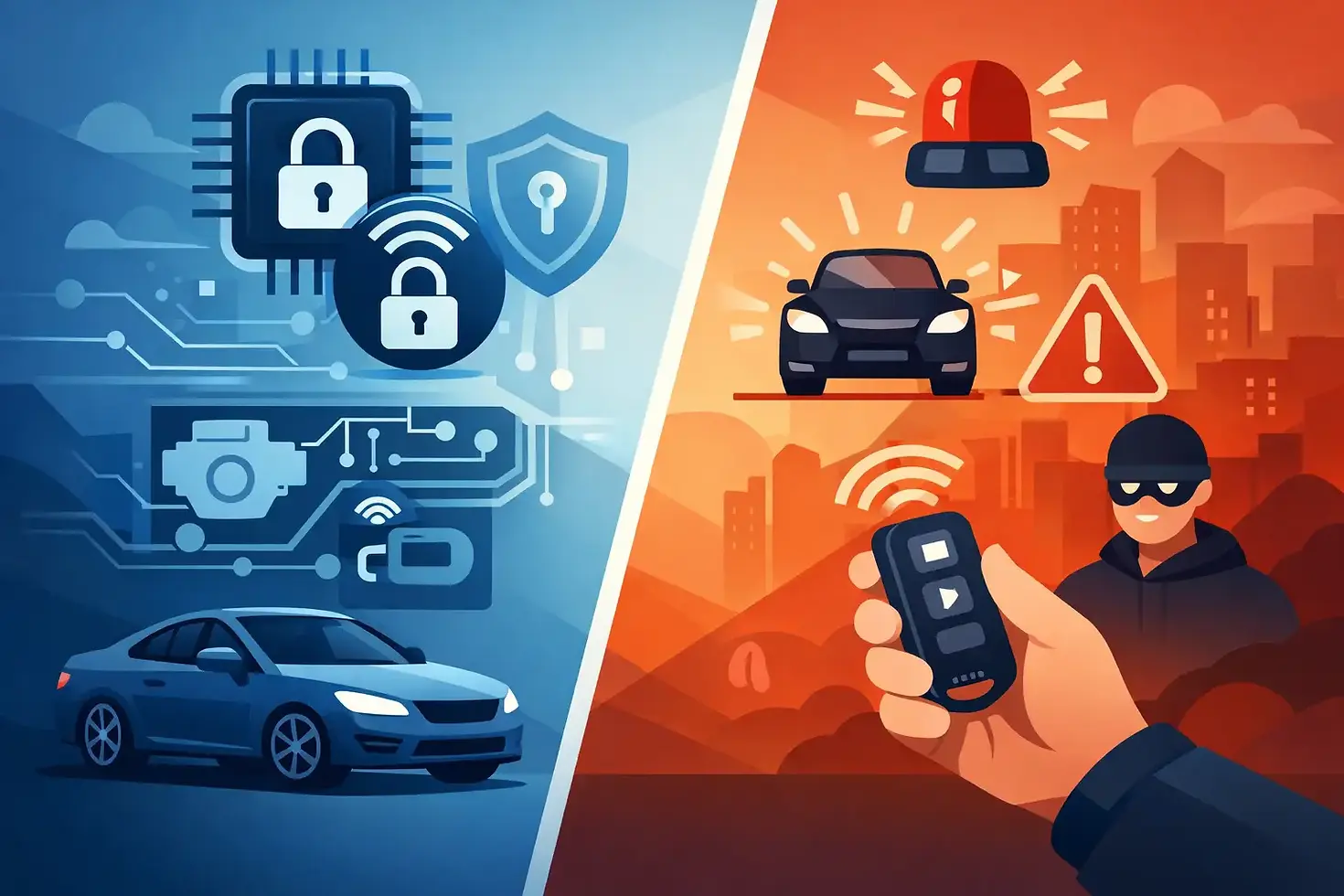
The simplest way to understand IGLA vs car alarm is this: a car alarm reacts to intrusion, while IGLA prevents authorization. Those are not the same job.
A standard alarm is built to detect events such as door opening, impact, glass break, tilt, or motion. When triggered, it sounds a siren and may flash lights. Some systems also send a phone alert. That can help if someone is checking door handles, attempting a break-in, or trying to tow the vehicle.
IGLA works from a different angle. It is an immobilizer that communicates with the vehicle electronically and requires a secure disarm method before the engine can be driven away. Even if a thief gets into the cabin with a cloned key or uses advanced tools to start the car, the vehicle remains protected because the proper authorization sequence has not been completed.
That distinction matters most on vehicles with push-button start and advanced factory electronics. Premium vehicles are often targeted because they are valuable, desirable, and packed with systems that can be exploited by experienced thieves. In those cases, noise is secondary. Immobilization is the mission.
Why alarms still matter - and where they fall short
Car alarms are not obsolete. They are just limited by what they are designed to do.
If someone leans into the vehicle, breaks a window, or tries to force a door, a quality alarm can create immediate disruption. That alone can stop an opportunist. In parking garages, apartment lots, and hotel lots, that attention can be useful. Many owners also like the familiar warning chirps and visible deterrent effect.
The trade-off is that alarms depend on people noticing and caring. In real life, many alarms are ignored because false triggers are common. A siren going off no longer guarantees intervention. Most people look over, assume it is accidental, and keep walking.
There is also the bigger weakness: if the thief can electronically authorize a start or mimic a valid key, the car may leave before anyone reacts. Some factory and aftermarket alarms do not meaningfully stop that process. They announce a problem. They do not always block the outcome.
That is why alarm-only protection often feels stronger than it really is. It is visible. It is audible. But against organized theft methods, visibility and sound are not always enough.
How IGLA changes the equation
IGLA is built for a theft landscape that has moved past simple forced entry. Instead of focusing on noise first, it focuses on making unauthorized driving impossible.
After installation, the system requires a personalized disarm sequence before the vehicle can be driven normally. That sequence is typically entered using existing factory buttons, which helps preserve the OEM interior without adding clunky aftermarket hardware. For owners of premium vehicles, that matters. Protection should not come at the cost of cabin aesthetics or factory functionality.
Because the system is discreet and integrated into the vehicle's electronics, it is also harder for a thief to identify and bypass quickly. There is no obvious keypad on the dash advertising how the vehicle is protected. That low-profile approach fits modern theft prevention much better than a visible siren alone.
This is where IGLA earns its reputation. It is not trying to scare a thief off with noise. It is forcing a dead end.
IGLA vs car alarm for luxury and high-end vehicles
For a basic commuter parked in a low-risk area, an alarm may be enough to satisfy the owner's comfort level. For a high-value truck, SUV, performance sedan, or luxury daily driver, the risk profile changes.
These vehicles are more likely to be targeted by thieves who know what they are doing. They are not smashing windows for spare change. They are arriving with tools, scanners, and a plan. A system that only responds after intrusion may not match that threat level.
That is why the IGLA vs car alarm decision tends to lean heavily toward IGLA for premium vehicles. The more desirable the vehicle, the more important immobilization becomes. Owners are not just protecting transportation. They are protecting a major asset, factory-integrated electronics, custom upgrades, and often a vehicle they specifically chose because they value the original design.
A well-installed IGLA system supports that goal because it adds security without forcing visible changes to the dashboard, key area, or interior trim. That OEM-preserving approach is a major advantage over generic aftermarket solutions that treat every vehicle the same.
When a car alarm is enough
There are cases where a traditional alarm still makes sense as the primary upgrade.
If your main concern is break-in awareness rather than full theft prevention, an alarm can be a practical solution. If the vehicle is older, lower in market value, or not commonly targeted for electronic theft, the cost-to-benefit ratio may favor a simpler setup. Some drivers mainly want audible deterrence for public parking and neighborhood monitoring. For that use case, a good alarm can still do useful work.
It also depends on your habits. A vehicle parked in a secured private garage every night faces a different exposure level than one parked outside a condo, airport, trailhead, or hotel. There is no one-size-fits-all answer.
Still, if you own a vehicle that thieves specifically seek out, the better question is not whether an alarm can help. It is whether help is enough.
The strongest answer is often layered protection
This is where the conversation gets more realistic. IGLA and a car alarm do not have to be competing choices in every build. In many cases, the smartest setup is layered security.
An alarm handles attention and disruption. IGLA handles drive-away prevention. Together, they cover different stages of an attempted theft. If someone breaks in, the alarm can create urgency. If they attempt to start and leave with the vehicle, IGLA creates the stop point.
That layered approach makes a lot of sense for owners who park in mixed environments or travel frequently. It is also attractive for enthusiasts who have already invested in wheels, performance upgrades, cosmetic work, or factory-style infotainment enhancements and want security that matches the value of the vehicle.
The key is doing it right. Premium vehicles have complex electrical architecture, and poor installation can create headaches that are far more expensive than the original upgrade. Fitment, programming, and vehicle-specific knowledge matter. This is specialist work, not generic big-box work.
Choosing the right system for your vehicle
If you are weighing IGLA vs car alarm, start with the real-world threat, not the brochure.
Ask yourself how attractive your vehicle is to thieves, where it spends the night, and how much you care about preserving the factory look and feel. Think about whether your biggest concern is vandalism and break-ins, or whether it is unauthorized starting and drive-away theft. Those are different problems, and they point to different solutions.
For many luxury and high-end owners, especially those driving newer push-start vehicles, IGLA is the more strategic choice because it addresses how theft actually happens now. A traditional alarm still adds value, but mostly as a supporting layer rather than the main line of defense.
That is the shift. Modern vehicle security is no longer just about making noise. It is about controlling authorization in a way thieves cannot easily work around.
At Alien Garage, that is exactly why specialist installation matters. Premium vehicles deserve protection that feels factory, performs like advanced tech should, and keeps your build looking untouched while working behind the scenes like something powered by extraterrestrial technology.
If you want the short answer, here it is: alarms warn, IGLA stops. And when the vehicle in question is worth keeping, stopping the theft is usually the part that matters most.
The best security upgrade is the one that fits how your vehicle is actually targeted, not how theft used to happen.


Comments