

How to Protect Push Start Car From Theft
- marco402364
- Jul 9
- 6 min read
A push-button start used to feel like a luxury feature. Now it is also a target. If you want to protect push start car from theft, you need more than a factory key fob and the hope that your vehicle’s stock security will be enough.
Modern thieves are not always smashing windows and hot-wiring cars. On high-end vehicles, the bigger threat is electronic theft. Relay attacks, key cloning, CAN bus attacks, and fast towing operations have changed the game. For owners of premium vehicles, that means convenience features can create new weak points unless you add the right layers of protection.
Why push-start vehicles are easier to target
Push-start systems are built around convenience. Your car detects the presence of an authorized key fob nearby, then allows ignition without inserting a physical key. That works well in everyday life. It also creates opportunity for thieves who know how to imitate or extend that signal.
A relay attack is one of the most common examples. One thief stands near your house, garage, or front door with a signal booster while another stands near the vehicle. If your key fob is close enough to an exterior wall, the signal can be captured and relayed to the car. The vehicle believes the key is present, unlocks, and may even start.
That does not mean every push-start car is easy to steal. Security varies by make, model, and year. Some manufacturers have improved encryption and sleep modes for fobs. Others still leave owners too dependent on factory systems that are designed for broad-market convenience, not determined theft prevention.
The real answer is layered security
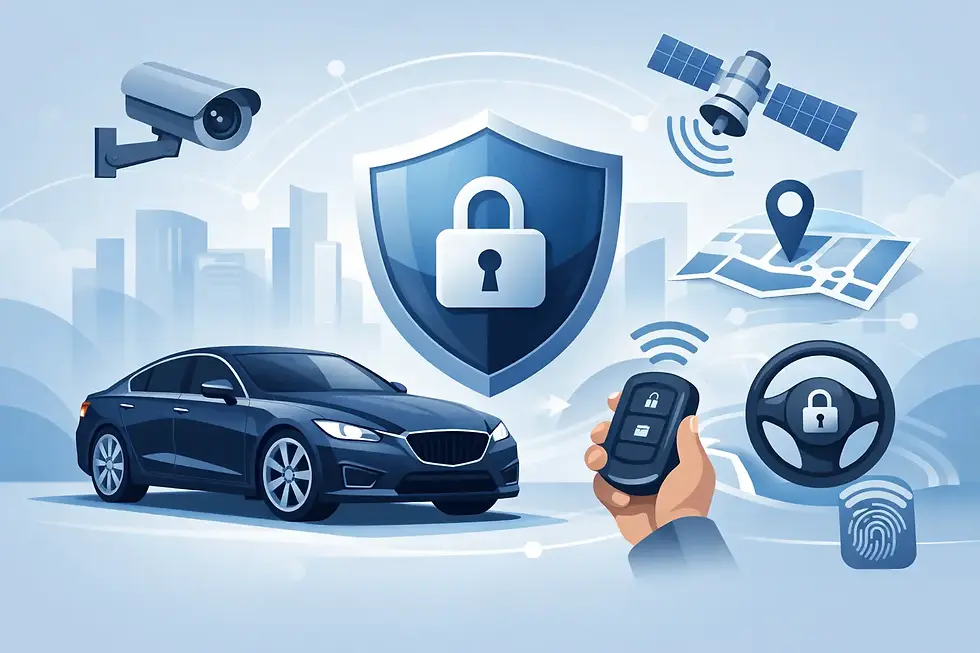
If you are serious about how to protect push start car from theft, start with this mindset: no single product solves every theft method. A visible deterrent can make a thief move on. An electronic immobilizer can stop an unauthorized start. Better key management can reduce the chance of a relay attack. Together, those layers force time, noise, uncertainty, and risk onto the thief.
That matters because most vehicle theft is opportunistic, even when it involves sophisticated tools. Criminals usually want the fastest possible win. The harder your vehicle is to move, the less attractive it becomes.
Start with the key fob, not just the car
The weakest point in many push-start setups is not the vehicle itself. It is the key sitting inside your home.
Keep your key fobs away from entry doors, front windows, and garage walls. If your keys normally live in a bowl by the door, that is convenient for you and for anyone trying a relay attack from outside. Store them deeper inside the house when possible.
A signal-blocking pouch or metal enclosure can also help, but quality matters. Cheap Faraday pouches sometimes fail after wear or poor stitching. Test whatever you use. Place the key inside, walk to the vehicle, and confirm the doors do not unlock and the car does not recognize the fob.
If your vehicle settings allow it, check whether your key fob can be put into sleep mode. Some brands now offer this to reduce relay vulnerability. It is a useful feature, but it is still only one layer.
Visible deterrents still work
Luxury owners sometimes skip old-school hardware because it feels outdated. That is a mistake. A steering wheel lock, pedal lock, or wheel clamp can still be effective because it changes the theft math right away.
A thief scanning a parking lot for an easy target often prefers a car with no visible resistance. Even if they have electronics to get inside, a physical barrier adds hassle and time. On a high-value vehicle, that extra friction can be enough to make them move to the next option.
The trade-off is convenience. You have to use it every time, and some products fit certain steering wheels better than others. But for street parking, airport parking, hotel lots, or long periods away from the vehicle, visible deterrents are worth serious consideration.
The best way to protect push start car from theft is immobilization
The strongest upgrade for many push-start vehicles is an aftermarket immobilizer that works independently of the factory key system. This matters because factory access does not always equal true driver authorization.
An immobilizer adds another checkpoint before the vehicle can move. Even if someone captures your key signal, clones a key, or gets into the cabin through electronic methods, they still cannot drive away unless they know the correct disarm sequence or have the proper authorization.
This is where high-end systems stand apart from generic alarms. A siren can create noise, but noise alone does not stop a vehicle from being taken. A properly integrated immobilizer interrupts the theft event at the critical moment - when the criminal tries to put the car in motion.
On premium vehicles, installation quality matters just as much as the hardware. Poorly installed security products can create electrical issues, compromise factory features, or leave obvious clues behind for thieves. A vehicle with advanced electronics deserves a specialist approach that preserves OEM function while adding real protection.
Alarm systems help, but they are not enough alone
A good alarm still has value. It can draw attention, trigger alerts, and create urgency for the thief. But many experienced criminals work through alarms quickly, especially in busy areas where people ignore sirens.
That does not make alarms useless. It means they should support a larger security plan rather than act as the whole plan. If your car has only a factory alarm and keyless entry, you may have sound without real resistance.
For some owners, app-based alerts are a practical upgrade. If your phone tells you when the vehicle is opened, tilted, bumped, or moved, you can react sooner. Just remember that a notification is not the same as prevention. Alerts are valuable, but stopping the car from being driven is stronger.
Parking habits matter more than most owners think
Technology gets most of the attention, but routine habits still make a real difference. Park in a locked garage whenever possible. If that is not an option, use well-lit areas with traffic, cameras, and limited exit routes.
Do not leave registration, valet keys, or extra fobs inside the vehicle. Do not assume a gated lot is secure enough for a high-end car. And if you travel often, think carefully about where the vehicle sits overnight. Theft crews look for patterns. A predictable vehicle in a predictable location is easier to target.
If your vehicle will sit for extended periods, a battery maintainer and a garage are ideal, but immobilization is still the better theft defense. A parked exotic, luxury SUV, or premium truck can be targeted just as easily as a daily driver if the criminal knows it will not move for a while.
GPS tracking is useful, but recovery is not the same as prevention
A lot of owners feel better once a tracking device is installed. That confidence is understandable, but it can also be misleading.
Tracking helps after a theft. It may improve recovery chances, support law enforcement, or help locate a vehicle before major damage occurs. But recovery can still mean broken glass, damaged wiring, missing wheels, stripped interior parts, or a branded title history depending on what happened during the theft.
If the goal is to protect the vehicle, the better strategy is to prevent unauthorized movement in the first place and use tracking as a backup layer.
Protect push start car from theft without ruining the vehicle
For owners of luxury and high-end vehicles, there is one more concern: not every anti-theft upgrade belongs on a premium platform. Generic aftermarket work can leave visible modules, cut wiring, poor panel fitment, and factory features that no longer behave correctly.
That is why product choice and installer skill matter so much. The ideal setup adds security without turning your cabin into an aftermarket science project. It should preserve the original look, retain normal convenience features where appropriate, and integrate cleanly with the vehicle’s electronics.
A specialist-installed system like IGLA makes sense for this reason. It is designed to stop unauthorized driving even if the thief has the key or clones the signal, and it does so without forcing owners to sacrifice the factory feel of the car. That balance is exactly what premium vehicle owners should expect - serious protection without compromise.
For drivers across Nevada, Utah, Wyoming, and Colorado, that kind of expert installation is not a luxury add-on. It is the difference between checking a box and actually hardening the vehicle against modern theft methods.
The smart move is not to panic about push-button start technology. It is to treat it like any other convenience system: useful, impressive, and worth backing up with real security that is powered by better thinking. When the vehicle matters, make it harder to take than the one parked next to it.


Comments