
Car Immobilizer Versus Alarm System: Which Wins?
A thief can ignore a screaming siren. What they cannot ignore is a vehicle that will not start, shift, or move under its own power. That is the central difference in the car immobilizer versus alarm system decision, especially for owners of premium vehicles that are targeted for theft, parts, and export fraud.
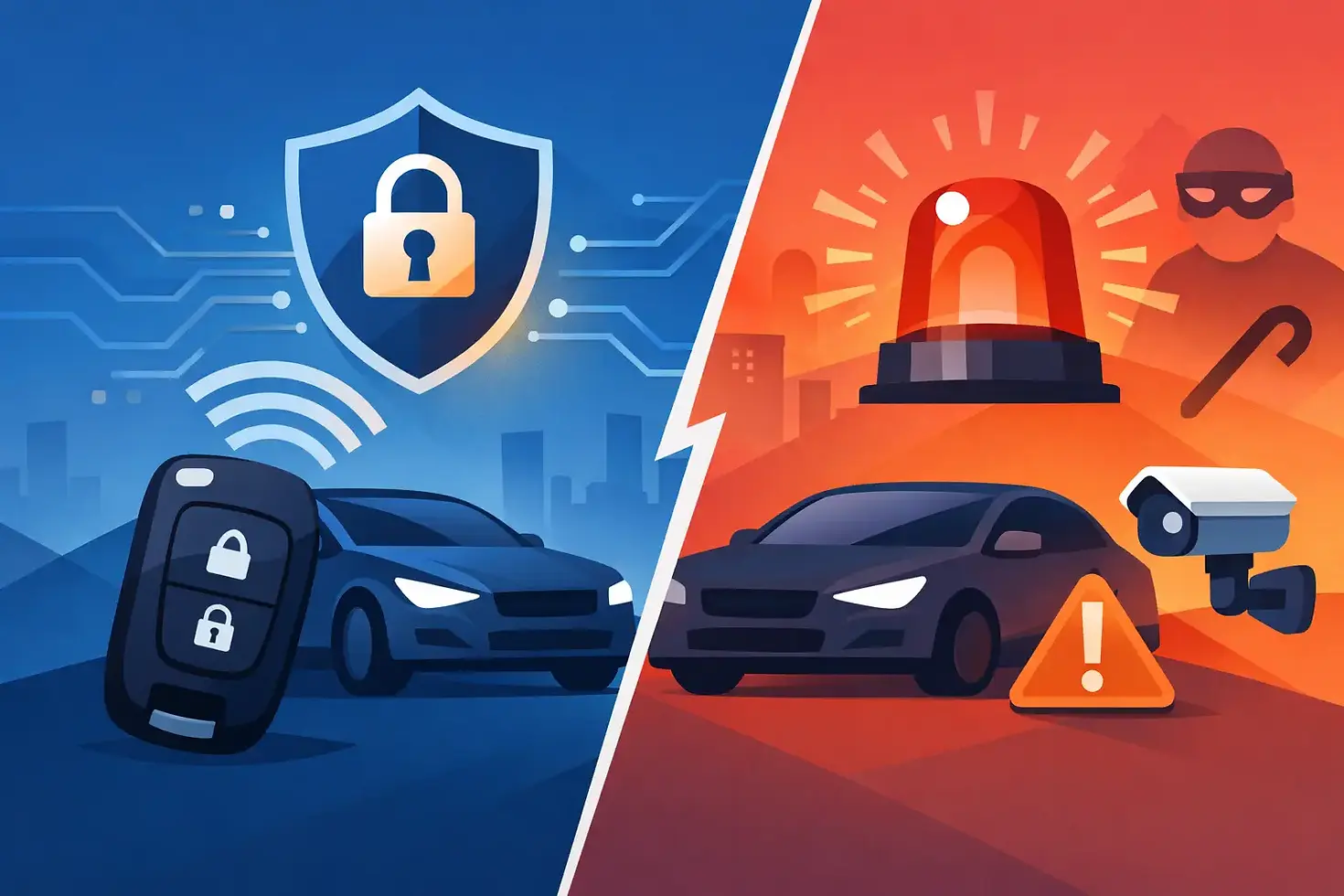
An alarm system makes noise and draws attention after an intrusion is detected. An immobilizer is designed to stop the theft from becoming a drive-away theft in the first place. Both can have a place in a layered security plan, but they solve different problems. For a high-value vehicle with sophisticated electronics, that distinction matters.
Car Immobilizer Versus Alarm System: The Core Difference
An alarm is a deterrent and notification device. It may trigger a siren, flash lights, send an app alert, or notify a monitoring service when a door opens, glass breaks, motion is detected, or a sensor is disturbed. Its mission is to make the vehicle a less comfortable target and alert the owner or people nearby.
An immobilizer is an authorization system. It blocks critical vehicle functions until the correct authorization is provided. Depending on the system and installation, that can mean preventing engine start, blocking gear selection, or disabling another essential control path. A properly integrated immobilizer turns a stolen key, cloned key signal, or compromised diagnostic connection into a much less useful tool.
The practical difference is timing. An alarm responds to suspicious activity. An immobilizer prevents operation. When seconds count in a driveway, hotel lot, airport garage, or downtown parking structure, prevention is usually the stronger security outcome.
Why Audible Alarms Are Not Enough by Themselves
Factory alarms are common, and many aftermarket alarms add useful features. They can discourage opportunistic break-ins, make an attempted theft more visible, and provide confirmation that someone has opened the vehicle. For a vehicle parked close to home, an alarm notification can give an owner valuable time to respond.
But alarms have limits. People are accustomed to hearing car alarms and often assume they were triggered accidentally. A determined thief may work quickly, wear hearing protection, or simply move the vehicle before anyone investigates. In crowded areas, a siren can blend into the background rather than stop a crime.
There is also the issue of access. Modern vehicle theft often does not look like a traditional break-in. Criminals may exploit relay attacks, cloned credentials, key programming methods, or diagnostic-port access. If the thief can start and drive the vehicle despite the alarm, the alarm has become a loud passenger.
That does not make alarms useless. It means they should be judged honestly: they are best at deterrence, awareness, and attracting attention, not as the sole barrier against a professional drive-away theft attempt.
How a Car Immobilizer Changes the Theft Equation
A quality immobilizer adds a separate authorization step that a thief must defeat before the vehicle can operate. With systems such as IGLA, the vehicle owner uses a personalized PIN sequence through existing factory controls. There is no obvious keypad added to the cabin and no alteration to the OEM appearance.
That factory-integrated approach matters for luxury and high-end vehicles. Owners should not have to choose between real protection and an interior that looks like it was modified at random. The right system works quietly in the background, preserving the look, feel, and daily operation of the original vehicle.
An immobilizer can be especially valuable when thieves have access to a key fob, use a relay device, or connect to the vehicle electronically. Starting the engine is not the same as gaining authorization. Without the correct PIN, the vehicle remains protected.
There is a trade-off: the owner must remember and enter the PIN as required. For most drivers, the routine becomes natural quickly. Still, it is worth discussing how you use the vehicle. If multiple family members, valets, service departments, or fleet drivers regularly operate it, the installation should be configured with those real-world situations in mind.
Not Every Immobilizer Offers the Same Protection
The term “immobilizer” gets used broadly. Many vehicles already include a factory transponder immobilizer, which requires a recognized key to start the car. That is a useful baseline, but it may not address newer attack methods involving stolen keys, key cloning, or unauthorized programming.
An aftermarket anti-theft immobilizer should add meaningful protection beyond what the vehicle already has. The value is in how it is integrated, what control paths it protects, and whether it creates an authorization layer that is difficult to identify and bypass.
Professional installation is part of the security design. Premium vehicles use complex communication networks, modules, and factory safeguards. A generic installation can create warning lights, reliability problems, or an obvious point of attack. Precision matters as much as the hardware.
Which System Fits Your Vehicle and Risk Level?
If your primary concern is break-ins, vandalism, or knowing when a door has been opened, an alarm can be a sensible addition. It is particularly useful when paired with notifications that reach you directly rather than relying only on nearby people to react.
If you are concerned about the vehicle being driven away, an immobilizer deserves priority. This is often the better fit for late-model luxury SUVs, performance cars, trucks, and vehicles known to be targeted in a particular area. It is also a strong choice for owners who park outdoors, travel frequently, or keep their vehicle in public garages.
For many high-end vehicles, the answer is not strictly one or the other. A layered setup can combine immobilization with audible warning, tracking, secure key habits, and careful parking choices. Each layer covers a different stage of an attempted theft.
A practical security plan may include:
An immobilizer to prevent unauthorized driving
An alarm or app alert to report intrusion activity
Tracking and recovery technology for worst-case scenarios
Protective measures for keys, diagnostic access, and garage storage
The order matters. Recovery tools are useful, but they come after the vehicle is already gone. An immobilizer focuses on stopping that moment from happening.
Factory Integration Is a Premium Requirement
High-end vehicles are not ideal candidates for one-size-fits-all electronics. Their factory systems are tightly connected, from keyless entry and remote start to driver profiles, digital displays, and networked control modules. An upgrade should respect that architecture.
At Alien Garage, security work is approached as a vehicle-specific installation, not a universal accessory sale. The goal is Out of This World theft protection that does not compromise the factory interior or interfere with the ownership experience. That means selecting the right system, placing it correctly, programming it carefully, and showing the owner exactly how to use it.
The best installation should feel almost invisible during normal driving. You retain the factory controls, keep the cabin looking original, and gain a security step that a casual thief is unlikely to anticipate. If service or valet access is needed, the system should be set up so the vehicle can be handed over without exposing your long-term security routine.
Questions to Ask Before You Buy
Before choosing an alarm or immobilizer, ask what theft methods affect your specific vehicle. A security system should address a credible risk, not just add features on a brochure. Ask whether the system prevents driving after a key relay or unauthorized key-programming event, whether it preserves factory functions, and how it will be serviced.
Also ask who will install it. The installer should understand the electrical architecture of your make and model, explain the day-to-day operation clearly, and stand behind both the product and the work. Security hardware is only as effective as its configuration.
Finally, think beyond the first week of ownership. A premium security upgrade should remain easy to use over years of commuting, road trips, service visits, and shared driving. The right setup protects the vehicle without making every start feel like a chore.
A siren may make noise, but real confidence comes from knowing an unauthorized driver cannot simply press the button, select a gear, and disappear. For valuable vehicles, the smarter move is to make theft difficult before it becomes someone else’s problem.


Comments