
How to Secure Keyless Cars That Thieves Target
A luxury SUV disappears from a hotel parking lot in under two minutes, and the owner still has both keys in hand. That is the problem with modern convenience. If you are wondering how to secure keyless cars, the answer is not one gadget or one habit. It is layered protection built for the way these thefts actually happen.
Keyless entry and push-button start systems are convenient, but they also create opportunities for organized thieves who know how to exploit factory vulnerabilities. On premium vehicles, the risk can be even higher because the resale value of parts is strong and the electronics are worth targeting. The right security plan keeps the factory look intact while making the vehicle far harder to steal.
Why keyless vehicles are easier to target
Most owners picture an old-school break-in with a smashed window and forced ignition. That is not how many modern thefts happen. With keyless cars, thieves often go after the signal, the network, or the programming path rather than the lock cylinder.
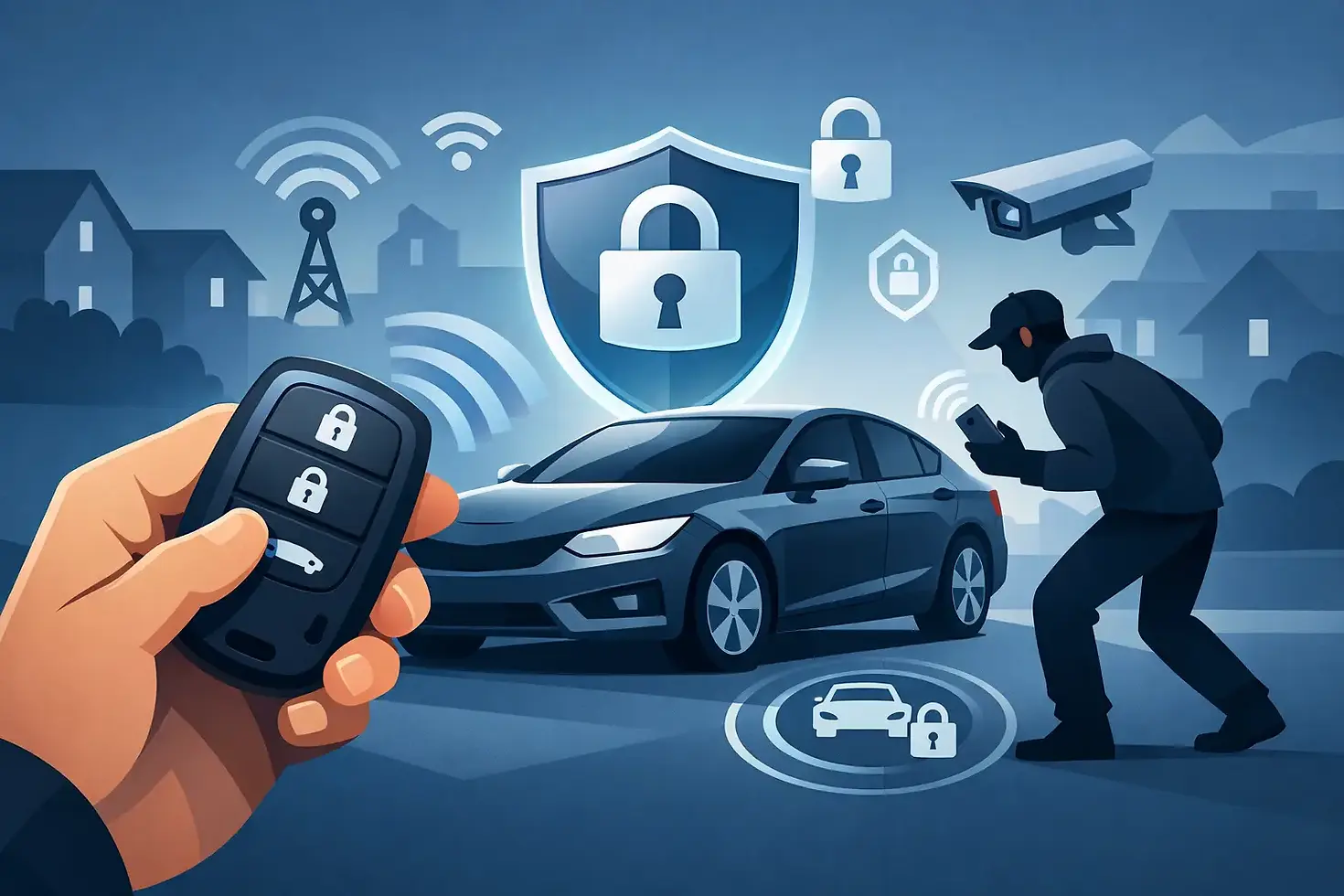
A relay attack is the most talked-about example. One device sits near your house, garage, or front door and searches for your key fob signal. Another device stays near the car. If the signal is extended successfully, the vehicle thinks the key is present and allows entry and startup. No broken glass, no loud alarm, and often no obvious signs of forced theft.
There are other methods too. Some thieves target the CAN bus system, accessing wiring through lights or body panels to inject commands that unlock and start the car. Others use diagnostic tools or key programming equipment to add a new key if they gain access long enough. That is why learning how to secure keyless cars means thinking beyond the key fob alone.
How to secure keyless cars with layered protection
The best defense is not a single product. It is a stack of obstacles that slow thieves down, expose them, or stop the vehicle from moving at all. Convenience matters, but on high-end vehicles, security should take priority over shaving off two seconds at startup.
Start with your key fob habits
The simplest upgrade is changing how you store and handle the key. Keep spare keys away from entry doors, front windows, and garage walls. At night, place keys in a signal-blocking pouch or metal enclosure that prevents relay amplification. If your vehicle or key supports sleep mode, use it.
This step helps, but it is not enough by itself. Signal blocking addresses relay theft, not every theft path. If someone attacks the vehicle network directly or tries key programming, a pouch at home does nothing.
Add a real immobilizer, not just a louder alarm
This is where many owners get tripped up. Factory alarms are useful for attention, but they do not always stop a vehicle from being driven away. A dedicated immobilizer changes that by preventing engine authorization unless the correct disarm process happens first.
For high-risk vehicles, a PIN-based digital immobilizer is one of the strongest options available. Systems like IGLA work by requiring a personal sequence through factory buttons before the vehicle can move. Even if a thief has the key signal, clones a key, or enters through another electronic method, the car remains immobilized.
That difference matters. An alarm reacts. An immobilizer denies permission.
Protect the diagnostic and programming path
A lot of theft prevention advice online stops at Faraday pouches and steering wheel locks. Those have value, but they do not address how sophisticated thieves work on late-model luxury vehicles. If your vehicle can be accessed through the OBD port or another programming route, that path should be considered part of the threat surface.
Depending on the platform, additional protection may include OBD locking, controlled authorization, and security modules designed to interrupt unauthorized startup logic. The exact setup depends on the make, model, and how the vehicle communicates internally. That is why cookie-cutter installs often fall short on premium platforms.
Physical deterrents still matter
Electronic security is the priority, but visible deterrents still have a place. A steering wheel lock can make a thief skip your car and move to an easier target. Wheel locks, secured parking, and well-lit locations also reduce risk.
The trade-off is convenience and appearance. Many owners of premium vehicles do not love the idea of adding bulky hardware to a refined interior. That is fair. Physical devices are best treated as supporting layers, not the main defense.
If you park long term at airports, hotels, condo garages, or public structures, visible deterrents can be worth the hassle. If your vehicle spends most nights in a private garage, electronic immobilization may do more heavy lifting.
The most effective setup depends on the vehicle
Not every keyless car has the same weak points. Some platforms are more vulnerable to relay attacks. Others are targeted through CAN bus entry or key programming. Brand reputation, theft trends in your area, and where you park all influence the right plan.
A newer European SUV, a high-trim domestic truck, and a performance sedan may all need different protection strategies. The common thread is that factory convenience systems were designed around ease of use first. Security upgrades need to account for how that specific vehicle behaves, not just what is popular on social media.
That is especially true if you care about preserving OEM fit and function. Premium owners usually do not want cut-up panels, clumsy add-ons, or aftermarket parts that feel out of place. The best security work is integrated, discreet, and professionally configured.
Professional installation is part of the security
Knowing how to secure keyless cars is only half the battle. Installation quality matters just as much as the hardware. A poorly installed immobilizer, alarm, or interface can create reliability issues, expose wiring, or make the system easier to bypass.
On modern vehicles, installers are working around factory data networks, body control modules, and highly integrated electronics. That takes platform knowledge, clean wiring practices, and a clear understanding of what should remain invisible. On a valuable vehicle, this is not the place for universal shortcuts.
A specialist installer can also help avoid the wrong upgrade. Some owners buy the loudest or cheapest option first, then discover it does not address the real theft method affecting their vehicle. Others end up with systems that interfere with factory operation or leave evidence all over the interior. Good security should feel factory-correct while adding serious protection beneath the surface.
For owners who want an Out of This World level of theft defense without sacrificing the original cabin, Alien Garage focuses on that OEM-preserving approach.
Common mistakes owners make
One mistake is relying on the factory alarm and assuming the vehicle is covered. Another is using only a Faraday pouch and thinking the job is done. Both can help, but neither solves every attack path.
A second mistake is prioritizing convenience over control. Some remote features are useful, but every added pathway into the vehicle should be evaluated carefully. More convenience can mean more exposure if the system is not designed well.
The third mistake is waiting until a theft wave hits your area. By the time a specific model becomes a hot target, thieves already know the method. Protection works best when it is installed before your vehicle ends up on that list.
A practical security plan for most keyless cars
If you want a realistic answer to how to secure keyless cars, start with three layers. Store keys in a signal-blocking pouch at home. Add a quality immobilizer that requires driver authorization beyond key presence. Then support it with smart parking habits and, when needed, a visible physical deterrent.
For many premium vehicles, that combination gives you coverage against both low-effort opportunists and more advanced theft attempts. If your model is commonly targeted, adding platform-specific protection against programming or network-based attacks may be the difference between inconvenience and a prevented theft.
There is no magic shield. Security is about making your vehicle a hard, time-consuming, high-risk target. Most thieves are not looking for a challenge. They are looking for speed.
That is the real mindset shift. The goal is not to make a keyless car feel old-fashioned. The goal is to keep the convenience you paid for while adding enough intelligent friction that the wrong person gets nowhere fast.


Comments